

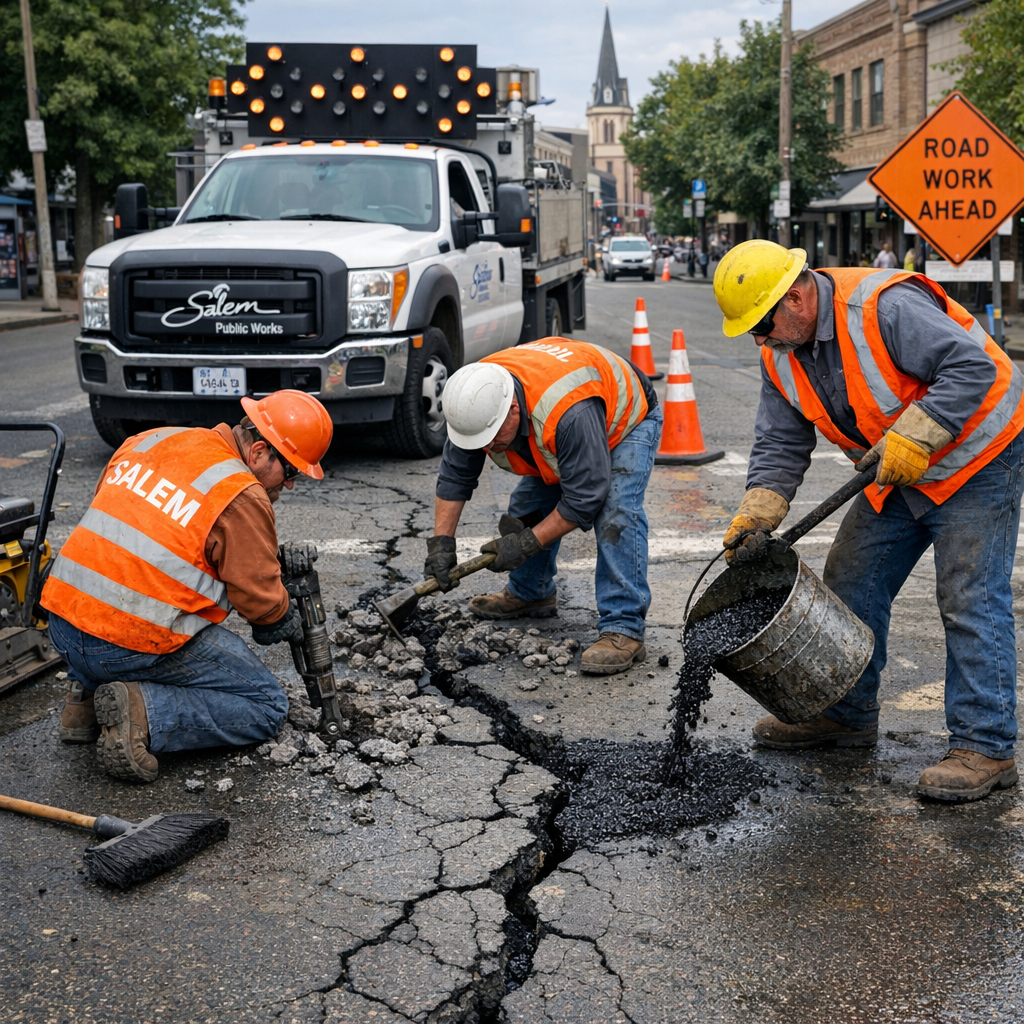
At a recent work session, Salem’s Public Works Director Brian Martin laid out a stark warning: city street conditions are steadily worsening, and current budgets aren’t enough to stop the decline. Residents and decision-makers now face pressing choices about how to restore and sustain safe, reliable roadways.
Current Gap in Infrastructure Funding
Out of Salem’s 1,302 lane miles of streets, 826 miles of sidewalks, nearly 200 signalized intersections, and about 70,000 street trees, the city estimates it needs roughly $28 million per year just to maintain everything at the level residents expect. But today’s funding covers only about $17 million annually—leaving an $11 million shortfall.
The situation gets more urgent when you look ahead: without increased investment, the Transportation Services Fund is projected to go negative by fiscal year 2029. The city projects spending less per lane mile than peer Oregon cities, even as materials and labor costs continue to rise.
Why Conditions Are Declining
Salem’s pavement condition index—a measure of the quality of road surfaces—has slipped from about 68 in 2018, rated “good,” down to 61 in 2022, which places the city solidly in the “fair” category. Streets tagged as poor or very poor are growing in number, making patching and basic maintenance more expensive over time. The budget shortfall amplifies this trend.
A major part of the problem is the City’s reliance on gas tax revenues to support infrastructure maintenance. While Salem draws about 72% of its Transportation Services Fund from the State Highway Fund, which is built off gas tax income, those revenues haven’t kept pace with inflation or rising project costs.
What Needs to Be Done
Getting pavement back to “good” condition would require Salem to spend nearly $41 million per year, almost $25 million more than current levels. That includes fixing damaged sidewalks, signal repairs, street tree maintenance, and increasing staffing—areas that have seen little change in resource levels since 2019.
In practical terms, the city and its leadership will need to explore a mix of solutions: boosting revenue, reallocating funds, seeking state or federal grants, or reprioritizing capital projects. Each option has trade-offs. Residents may see slower growth in other city-run programs if more money goes into roads, but failing to act could mean worsening travel conditions, safety risks, and higher costs down the road.
What Residents Can Expect
In upcoming budget cycles, expect to hear more public meetings and outreach around transportation and infrastructure priorities. Salem City Councilors will likely discuss potential funding options, including bonds, local levies, or partnerships. The community may also be asked to weigh in on what maintenance or street projects are most important.
For now, the message from City Hall is clear: without concerted effort and investment, the condition of Salem’s streets won’t just stall—it will decline further. And reversing that decline gets vastly more expensive the longer the delay.